If you've ever typed “how much is a starter motor” into a search bar at 10 p.m., you know the real question isn't the part price. You want to know whether you're paying too much, whether a cheaper aftermarket part is good enough, and whether you can do it yourself.
I run purchasing for a 40-person logistics company. I manage about $220,000 in fleet maintenance spend each year, and I've spent the last six years comparing quotes, checking invoices, and tracking every repair line item in a cost spreadsheet. This isn't a mechanic's opinion. It's the view from the desk that approves the repair bill.
When I look at repair costs, I keep coming back to one comparison: the dealer/OEM route versus an independent shop using quality aftermarket parts. For this article, think of it as Path A (dealership with branded OEM parts) versus Path B (independent shop with Bendix Fleet Metlok pads, OE-quality bulbs, and a new or rebuilt starter). I'm going to show you where each path wins, and where the “cheaper” path can quietly cost you more.
Parts: Bendix Fleet Metlok MKD1589FM brake pads vs OEM pads
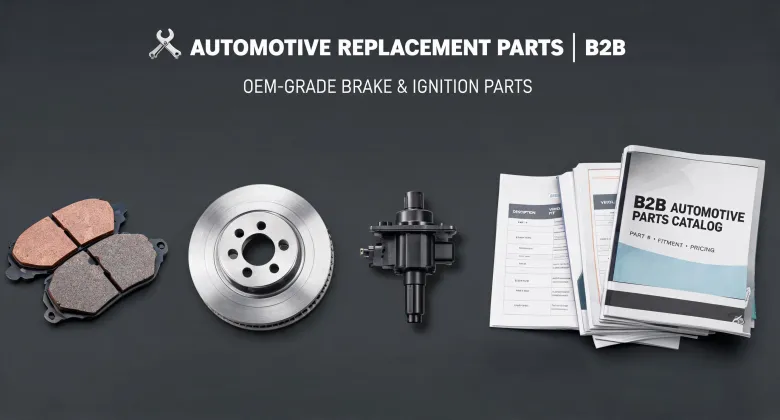
Brake pads are the clearest place to see the gap. In October 2024, I logged a quote for a mid-size pickup in our fleet. The dealer's OEM pad set was $158 for the part. The Bendix Fleet Metlok MKD1589FM pad set came in at $68 from an independent supplier. Same application, similar semi-metallic friction category. That's a $90 difference before labor, and labor was cheaper at the independent shop too.
I'm not claiming the two are identical. An OEM pad is tuned to the original rotor friction and noise profile. The Bendix Fleet Metlok line is a fleet-grade replacement designed for higher mileage and consistent stopping, and in our log, the difference in pedal feel was not dramatic. But if you're comparing total cost of ownership—not just the first quote—the aftermarket pad often wins on routine brake work.
One warning: verify the part number and application. MKD1589FM fits specific vehicles. Don't buy it based on a memory of a part number you saw in a forum.
What is a Bendix on a starter? The naming trap
Now the confusing part. A Bendix on a starter is not a brake pad. It's a starter drive — the pinion gear mechanism that pushes the tiny gear into the flywheel when you turn the key. The name comes from Vincent Bendix, who developed the drive long before the Bendix brake pad brand became common. If a mechanic says “the Bendix is worn,” they're usually talking about the starter drive, not your brakes.
Why does this matter for cost? Because when you search for Bendix brake pads, you may also see starter drive kits labeled “Bendix drive.” They are not interchangeable. I've seen an invoice show a Bendix drive part added to a brake pad job because someone grabbed the wrong catalog line. That kind of error goes both ways: it inflates the bill or causes a warranty denial.
Labor rate reality: dealer vs independent shop
In 2024, the dealer labor rate in our region was $145 per hour. Independent shops near our yard ran between $85 and $110 per hour. That gap is baked into every job, but it matters most on small repairs.
Take changing a turn signal bulb. The bulb itself was $7 at the parts store. A dealer quoted $45 flat because the service writer explained it, wrote it up, and the book time included overhead. An independent shop down the street charged $20 and installed it while I waited. On some vehicles, changing a turn signal bulb is a five-minute job; on others, you have to pull the headlamp assembly. If you've ever watched a YouTube video and realized the socket is buried behind a wheel liner, you know the labor estimate suddenly makes more sense.
But there's a communication warning here. I once asked a shop to “check the brake lights and the right turn signal.” They heard “replace the bulbs and diagnose the flasher.” The result was a $14 bulb job that became a $310 flasher module replacement. The flasher wasn't bad. That mistake is why I now ask for written line items and a phone call before any unscheduled work.
Brake caliper bolt torque: the hidden DIY cost
If you're planning to install those Bendix Fleet Metlok pads yourself, do not skip the torque wrench. Brake caliper bolt torque is not a suggestion. I know this because I skipped it once.
I told myself the odds were low. I tightened a caliper bolt “by feel” and called it good. Two weeks later, the pad started rattling, and one caliper bolt had backed out enough to scare me into a $180 shop visit. The shop re-torqued everything and checked the slides. No crash, no damage, but it was an avoidable cost.
Most passenger car caliper bolts use torque specs in the 25 to 80 ft-lb range. But that range is useless without your vehicle's exact number. Check the service manual or a verified database. Don't guess. A cheap torque wrench is cheaper than a caliper that comes loose.
How much is a starter motor? A realistic range
Let's answer the search query directly. How much is a starter motor? Based on parts listings and quotes I checked in January 2025, here's a practical range:
- New starter: $150 to $450 for the part
- Rebuilt starter: $80 to $250
- Labor: $150 to $350, depending on engine layout
- Typical total: roughly $300 to $800
Public repair pricing, as of January 2025: RepairPal lists an average starter replacement cost of roughly $400 to $650 for many common cars. Verify current prices for your VIN.
Take this with a grain of salt: I'm not 100% sure of the current price for your specific VIN (note to self: check updated labor rates before quoting). The bigger cost trap is replacing a starter that wasn't the true failure point. A worn Bendix drive can make the starter spin without cranking the engine. In that case, a rebuilt starter may be the smart total-cost move because it comes with a new drive, but only after a technician confirms the starter is the cause. Don't hand a parts store a credit card before diagnosis.
Which route should you choose? My honest limit
I won't tell you that the OEM route is always a rip-off. There are real reasons to use it: warranty requirements, a technical service bulletin, software updates, or a fleet contract that requires branded parts. But for routine wear items, the independent shop with Bendix aftermarket parts gives us similar performance for less money. That's not because the dealer is dishonest. It's because OEM distribution and factory diagnostics have a higher cost structure.
My suggestion by scenario:
- Changing a turn signal bulb: DIY or a small independent shop. Don't pay dealer book time unless the job is covered by warranty.
- Brake pads: Bendix Fleet Metlok pads installed with confirmed caliper bolt torque. If you have a torque wrench, DIY is usually fine. If not, pay a shop that documents the spec.
- Starter motor: Diagnose first. If the Bendix drive is bad, a rebuilt starter is often the best total cost.
- Dealer-only scenario: Use the dealer when you need a specific diagnostic computer, a TSB repair, or a part that only the OEM produces.
Part of me wants to consolidate every repair with one vendor for simpler accounting. Another part knows that having two independent shops compete saved us about $8,400 in 2023. I compromise: one primary shop, one backup, and a second quote on anything over $500.
There is no single “best” route. The best route is the one where you know the part price, the labor price, the torque spec, and what you're buying. For us, that usually starts with Bendix brake pads, a diagnosis before a starter sale, and a torque wrench that gets used.