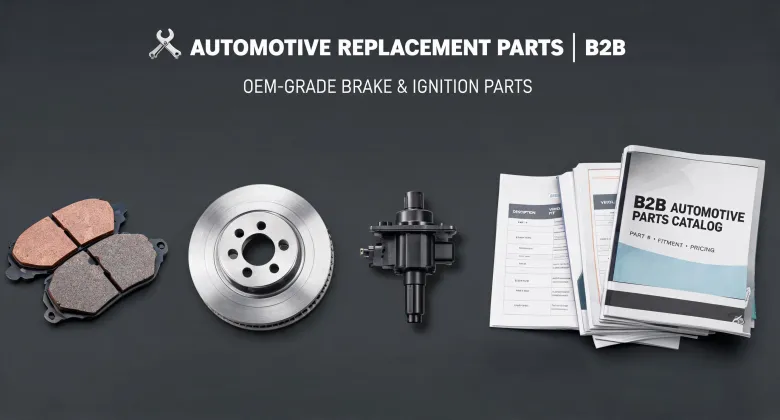
I don't have a mechanic's certificate. I have a purchase order log. For the last four years I've been the office administrator for a 60-person company. Part of my job is handling purchases for a small fleet of vehicles and some facility equipment. I manage about $120,000 in annual orders, maybe a little less depending on budget cycles. When I search where are Bendix brake pads made, it's not for a restoration project. It's because a brake pad order has to be approved, delivered, and installed without a surprise.
The short answer is that it depends on the part number. The longer answer is why Bendix brake pad reviews look so contradictory. Bendix is a brand, not a single factory.
What 'made in' means on a brake pad box
On paper, this question sounds easy. In the warehouse, it isn't. The same Bendix name covers different pad families for different vehicles, and those families can use different friction material suppliers. A part number can also be sourced from more than one production location during its life. So one forum post says Mexico, another says China, and another says the United States. They may all be right about different boxes.
Per the FTC's Made in USA labeling guidance (ftc.gov), a label like 'Made in USA' means the product is all or virtually all made in the United States. That is a legal claim. A brand name is not the same legal claim. If factory origin matters to you, read the box for the exact part number, not the banner on a company website.
A Bendix brake pad review, split by scenario
I am not going to tell you that one Bendix pad is the best for every car. The right compound depends on the vehicle's weight, route, and driver. Here are three situations I run into as a buyer.
Scenario 1: A Camry that does city driving
Our company uses a Camry as a fleet sedan. It does stop-and-go driving and highway ramps. For that kind of duty, a ceramic-compound pad is the usual right call. The Bendix pads we installed were quiet, produced moderate dust, and had enough cold bite for normal traffic. They are not track pads. I would not expect them to survive repeated high-speed stops like a race pad would. That is okay. The Camry is not raced.
Scenario 2: A pickup that tows
If the same company also had a truck for pulling equipment, I would choose a different pad. Semi-metallic friction material can handle more heat, but it makes more dust and can wear the rotor sooner. A lot of buyers choose ceramic because it is quiet. On a towing vehicle, that is the wrong priority. Heat management matters before noise.
Scenario 3: The old pads look fine but the brakes feel wrong
If the pedal pulses or the car pulls, the pad might not be the problem. A caliper can hang up on corroded sliding surfaces. New brake pads cannot fix that. This can also show up after installation as a brake pull that was blamed on the pad brand.
Brake caliper lubrication is a separate line item
From the outside, a brake job looks like removing the wheel and clamping a new pad against the rotor. The reality is that the caliper has to slide. If it cannot slide evenly, one pad wears faster and the other does the work. You can install the best Bendix pad in the catalog and still get a comeback.
During one front brake service on a fleet car, I added brake caliper lubrication to the work order. The tech cleaned the caliper bracket and slide pins, applied high-temperature brake grease, and then installed the pads. The driver said the pedal felt normal immediately. The caliper was not leaking or seized. It was just dry.
If you are doing this yourself, use brake caliper lubricant on the moving contact points and on the back of the pad if the pad kit says to. Do not put grease on the friction surface. That small mistake can ruin the pad and create a safety issue.
A Camry headlight bulb and an ecobee smart thermostat followed the same logic
Around the same time, my purchase log included a Camry headlight bulb and an ecobee Smart Thermostat Enhanced. Odd mix? Not for my job. The decision process was the same.
For the Camry headlight bulb, I could have typed the model year and bought the first result. Instead, the old bulb was removed and read. It had the part number stamped on its base, and the connector matched. The replacement was a standard bulb swap. If I had ordered a bulb type that was close but not correct, it would have created a return loop. That wastes more money than the bulb costs.
I also read several ecobee Smart Thermostat Enhanced reviews before ordering one for our office. The feature that stood out was the remote sensor. We have a training room that gets too warm each afternoon, and the sensor lets the thermostat react to that room rather than the hallway. That is the same idea as matching the pad compound to the route. Pick the product based on the problem it must solve.
To be fair, the reviews also warned about heat pumps and lack of a C wire. Our system had a C wire, so installation was simple. If yours doesn't, the box includes a Power Extender Kit, but read about that before buying. Same idea as brake caliper lubrication: the extra step only matters if you know about it.
How to tell which scenario you are in
Before you order brake pads, run through this list.
- What does the vehicle actually do all day? City commuting, towing, highway? The answer filters the friction material.
- Has the brake caliper hardware been serviced? If not, include brake caliper lubrication in the labor estimate.
- Are you buying a brand, a part number, or a country-of-origin label? For a business that needs traceability, part number and supplier documentation matter, maybe more than a logo.
The old belief that a brand name tells you exactly where a part is made belongs to an earlier supply-chain era. As of 2025, the label on the box tells you more. The fundamentals have not changed: use a friction material that fits the job, make sure the caliper can move, and verify the exact bulb or thermostat model before purchasing.
Bendix is only the starting point. The part number and the condition of the caliper decide whether the repair actually works.