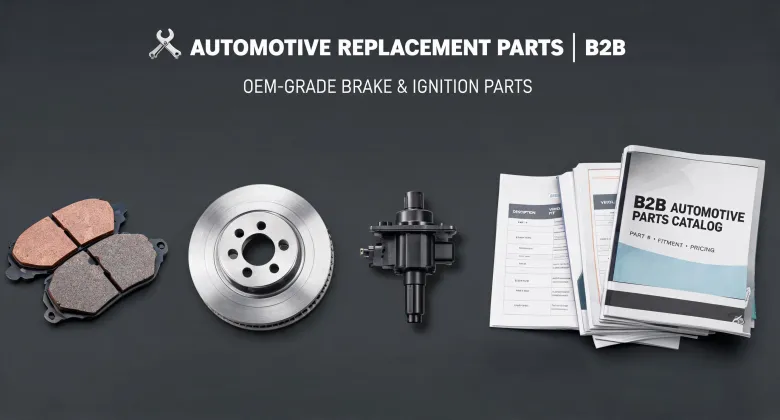
Buy the diagnosis before you buy the part. That's the rule I apply whenever a technician asks me to order a Bendix disc brake caliper, a PF454 oil filter, or anything else in the Bendix products catalog. And to answer the question everyone searches before that conversation: Can AutoZone test an alternator? Yes, in most locations, and it is free at our local store. But use it as one row on a differential diagnosis chart, not as the final word.
I am not an automotive engineer. Let me get that out of the way first. I am the office administrator for a 21-person fleet maintenance company, and I have handled purchasing since 2020. I manage roughly $380,000 a year in parts buying and service-related ordering across nine vendors, and I report to both operations and finance. I don't turn wrenches for a living, and I do not pretend to. What I do know is the purchasing side: verifying part numbers, checking application data, and explaining to my CFO why a wrong part cost us money.
Why I ask for a differential diagnosis chart before a PO
In 2022, we replaced an alternator on a delivery van because the red battery light was on. The alternator tested fine after it was removed. The real problem was a loose belt and a weak tensioner. That mistake cost us an alternator, a core charge headache, and half a morning of shop time. I still kick myself for not asking for evidence first.
Now the service manager initials a one-page differential diagnosis chart before I create a significant part order. The chart is not a legal document, so please don't picture something heavy. It is a table with three columns: symptom, causes to check, and evidence. For a slow-cranking vehicle, the causes include the battery, cables and grounds, starter current draw, alternator output, and parasitic drain. The order gets placed only after the evidence column has at least one clear finding.
What Bendix products taught me about brands and part numbers
Bendix products show up in our shop often. Brake pads, rotors, hydraulic parts, and calipers are regular line items. When a repair order says a Bendix disc brake caliper, I need to know more than the brand. I need the side, the brake package, and the VIN. A caliper body might look the same, but piston diameter, bracket spacing, and pad retainer can change with the vehicle option code. If the application data doesn't match, the brand name doesn't help.
I still kick myself for a caliper order that I cleared without checking the brake package code. The box said Bendix, the label looked correct, and the bracket still didn't line up. The technician caught it before the wheel went back on. The restocking fee was manageable. The embarrassment lasted longer. That is why I now ask for the diagnosis and the application check before the PO. It feels like extra paperwork until it saves you from an angry installer.
A differential diagnosis chart is especially useful for brake work. Think about a brake pull: it can be a seized caliper, a collapsed brake hose, a bad tire, or an alignment issue. If the evidence points to a caliper, then ordering a Bendix disc brake caliper makes sense. If the evidence is just 'it pulls,' you haven't diagnosed anything yet.
PF454 oil filter: another reminder to verify the application
The same rule applies when someone asks about the PF454 oil filter. Part numbers can look simple, but an oil filter is not just a metal cylinder with threads. Thread size, gasket type, bypass valve setting, length, and capacity all matter. If the catalog listing for a PF454 oil filter doesn't include the vehicle or equipment application, I do not override it. I send the request back and ask for more evidence.
I made that kind of mistake with another filter in my first year on this job. A vendor sold me an equivalent that threaded on perfectly. It looked right. Later I found the bypass valve specification was different from the original. Nothing broke, but I stopped trusting the words 'it's the same' after that. I do not mean you need a lab report for every filter order. I mean you need the right catalog page. The same logic applies across the Bendix products line.
Can AutoZone test an alternator? Yes, and here is how we use the result
Can AutoZone test an alternator? At our local AutoZone, yes. They ran a free battery and charging-system test on one of our work trucks while we waited. According to AutoZone's website (autozone.com, accessed March 2025), battery, alternator, and starter testing is free at many stores, and local availability can vary. If I am planning to drive twenty minutes around a service appointment, I call ahead.
The test gives us a data point, not a narrative. An alternator can fail only under heat or load, which a lot of handheld testers won't catch. A bad ground can cause an alternator to charge incorrectly even though the alternator itself is fine. That is why the result belongs in the differential diagnosis chart. It sits next to a battery test, a visual belt check, and a voltage-drop measurement before I write the PO.
Why do I care about this as a buyer? Because the most expensive part is the one you didn't need. The test is free, but it isn't valuable until it changes your decision.
Where this approach stops
I buy replacement parts, and I do not design new vehicles. If you are a Tier 1 supplier or OEM engineer evaluating Bendix products for a new program, you are in a different conversation. That discussion includes material specifications, validation data, production part approval, tooling, and contract terms. My small checklist is not the right tool.
This is also context-specific. Our shop has a controlled workflow and a small number of regular vehicles. Someone ordering parts for a one-off project or a personal vehicle may not need the same level of formality. The principle, though, stays the same: check the symptom, check the application, and let the evidence write the purchase order.
So the next time someone asks, Can AutoZone test an alternator? I answer yes, and then I ask what the differential diagnosis chart says. If you can show that, the right Bendix products order gets approved a lot faster.