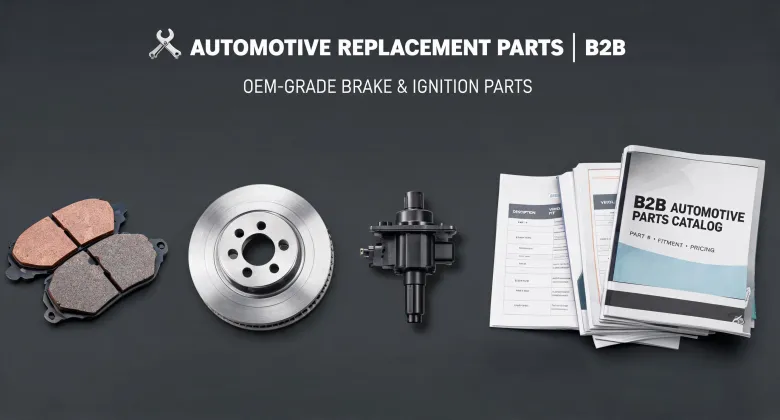
The Surface Problem: “It's Just a Part”
Last month, I ordered another starter bendix for a Ford 8N tractor we keep at the yard. It was the second one in three weeks. The first one I bought cost $24 and shipped overnight—looked perfect in the box. But it was dead within a week, and the mechanic gave me that tired look I'm starting to recognize.
I'm an office administrator, not a mechanic. I handle purchasing for a 20-person logistics company, which means I keep 14 vehicles and a few pieces of equipment moving on a budget that finance keeps trimming. Six months ago, if you'd asked me about the biggest risk in buying auto parts, I'd have said “wrong part number.” Now I know the real answer: the cost of a cheap part is never the price you pay for it.
The $23 Thermostat That Wasn't a Deal
When a driver told me the 2015 Chevy Cruze needed a thermostat, I did what any cost-conscious buyer would do: searched for the best price on a "2015 chevy cruze thermostat" and picked the one that fit and had free returns. $23, done. The dealer wanted $140 for the OE part, and I was feeling pretty good about saving us $117.
The mechanic called at 2 p.m. and needed the part by the next morning. Normally I'd compare three suppliers, but there was no time. I went with the cheapest listing—the first one I saw. Two installs later, same code, same coolant leak, I wasn't feeling good.
The no-name thermostat I bought turned out to have an opening temperature that drifted a few degrees after a few heat cycles. The ECM noticed, the engine ran rich to compensate, and the mechanic had to drain and refill the coolant twice. Total damage: $285 in parts, fluid, and labor. Plus the original $23.
(Note to self: just because the checkout page says “fits” doesn't mean the part works like the original.)
The Deeper Issue: Quality Tiers Nobody Tells You About
Auto parts aren't one category. There are OE (original equipment), OEM-grade aftermarket, performance, and budget lines. The prices look like a hierarchy, but the label on the box doesn't always reflect what's inside.
Take the Ford 8N starter bendix story. The 8N is a 1940s tractor, but we still use it to push trailers around the yard. A starter bendix is a small gear that throws the starter motor into the flywheel. If it doesn't engage smoothly, it grinds metal. The cheap aftermarket bendix I bought was made with a grip surface that sounded like an upgrade but was actually harder than the original design. It chipped teeth off the flywheel ring gear. That's a $560 fix—on a tractor worth maybe $2,000.
This is where I hit my expertise limit. I'm not a materials engineer, and I can't tell you which alloy a bendix should be made from. What I can tell you from a purchasing perspective is: when a part is 70% cheaper, it isn't the “same part.” Someone took cost out—sometimes in a place you can't see until it fails.
The “Same Factory” Myth
There's a legacy belief that aftermarket parts come off the same production line as OEM parts. That was true for certain components 20 or 30 years ago. Today, it's mostly a memory. Some replacement parts are made on the same tooling, but with cheaper seals, thinner springs, or no final test. They look identical in a product photo.
I'm not saying every aftermarket product is bad. I've bought solid aftermarket brake pads and filters. But the deeper problem is that you can't tell the difference from the listing. And when you're buying for a fleet, a wrong guess costs you double labor plus downtime.
When the Diagnosis Is Wrong, Cheap Parts Make It Worse
One question our drivers ask often: can a bad catalytic converter cause a misfire? The short answer is yes—if the catalyst matrix breaks down and blocks the exhaust, you'll get misfires, rough idle, and a check-engine light. But that's a diagnostic question, not a parts question.
A few months ago, a van came in with a misfire. The first shop guessed spark plugs, so I ordered a set of cheap plugs. Still misfired. Next they guessed a coil pack. Still misfired. Eventually someone checked the catalytic converter and found it clogged. The parts I'd bought were now in a return box, and the van had lost a week of work.
From an office-buyer perspective, that taught me a rule: don't order a replacement part until you know the original problem. Cheap parts just make a bad diagnosis more expensive.
The Real Cost of the Cheap Path
Let me run through some actual numbers from our fleet ledger:
- Thermostat, 2015 Chevy Cruze: $23 part + $285 in second diagnosis and labor = $308 total for what should've been a one-hour job.
- Starter bendix, Ford 8N: $24 part + $540 flywheel ring gear + $80 labor = $644 total for a $24 part.
- H9 LED headlight bulb: A driver bought a $19 “H9 LED headlight bulb” online. It didn't fit the housing properly, the heat sink never touched the socket, and the wiring connector melted. New connector and socket: $110. (Thankfully, no fire.)
Then there are parts where a low price is a warning sign. Our commercial vehicles use air disc brakes, and I've had vendors try to sell me a “universal” caliper rebuild kit with three O-rings in a ziplock bag. The Bendix air disc brake caliper rebuild kit comes with every seal, bushing, and bolt needed to do the job properly. It's not the cheapest kit. But it's for a braking component on a vehicle that weighs 25,000 pounds when loaded. FMVSS 121 exists because brake failures kill people.
I don't care how attractive the price on a no-name brake kit looks. That is not a place to save money.
What I Do Differently Now
I didn't learn this from a webinar; I learned it from a stack of invoices. Here's what works:
- Ask for the total before you approve the order. Not just the part price—shipping, core charge, return fee. If a supplier won't list those in a quote, I don't buy. I've learned to ask “what's not included” before I ask “what's the price.”
- For safety-critical parts, buy from a brand that publishes engineering specs. Bendix is one of those brands. Their rebuild kits list every part in the bag, and their catalogs include OEM cross-references so you know you're getting the right configuration.
- For lighting, look for DOT/SAE compliance and a real beam-pattern description. A compliant H9 LED bulb should produce a beam pattern similar to stock halogen. A $15 mystery bulb might look bright in a photo and fail on the road.
- Keep a failure log. Just a spreadsheet. Part, brand, price, date, failure date. Six months of that data will tell you which “deals” are actually expensive.
This isn't a sermon about only buying OEM parts. I still buy budget components for non-critical things like cabin filters. The key is knowing which parts affect safety and the next repair.
The Bottom Line
I'm not a mechanic, and I can't tell you exactly when a bad catalytic converter causes a misfire or whether a given thermostat truly matches OE tolerances. What I can tell you is that a fifty-cent saving on a crucial part can turn into a three-day surprise.
Good suppliers are transparent. They tell you what's included, what the shipping fee is, and why their part costs more. That transparency often feels like a sales pitch—until it saves you from a $600 mistake.
(I really should build that failure log dashboard this weekend. Mental note: do it.)