Here's the thing: I think the cheapest part in the catalog is usually the most expensive part you will ever buy. I didn't always think that. For my first few years in purchasing, I believed the job was simple—find the lowest price, send the PO, move on. Then I made enough mistakes to change my mind.
I've handled parts orders for 11 years, first at a small rebuild shop and now at a production facility that uses stamped components, brake hardware, and replacement parts. I've personally made—and documented—14 significant ordering mistakes, totaling roughly $18,000 in wasted budget. So this isn't theory. I made the cheap-part mistake so many times that I now run a checklist before any order. Bendix isn't the only name in the market, but it's the benchmark we use for starter drives and brake hardware. This is why I think the 'cheapest' quote is often the wrong one.
Price is what you pay. Cost is everything after that.
The first mistake that woke me up happened in 2017. A repair order called for a Bendix drive starter motor. A supplier offered a compatible unit for 35% less than the one we usually ordered. It looked identical, had the same dimensions, and the listing said 'direct replacement.' So I ordered 40 of them.
They were not direct replacements. The housing fit, but the internal drive mechanism didn't engage reliably on cold mornings. In our region, eight months of the year are cold mornings. We had to remove all 40 units, inspect the clutches, and reinstall 25 of them with a different part. That mistake cost $1,100 in labor, $380 in freight, and two weeks of delays. The cheap quote was cheap for a reason.
I still remember the accounting: the $42 per-unit difference—a total of $1,680 saved—got swallowed by the rework, downtime, and the customer's loss of trust. The supplier didn't offer a return label; they 'resolved' it by giving us 5% off our next order. I haven't repeated that one.
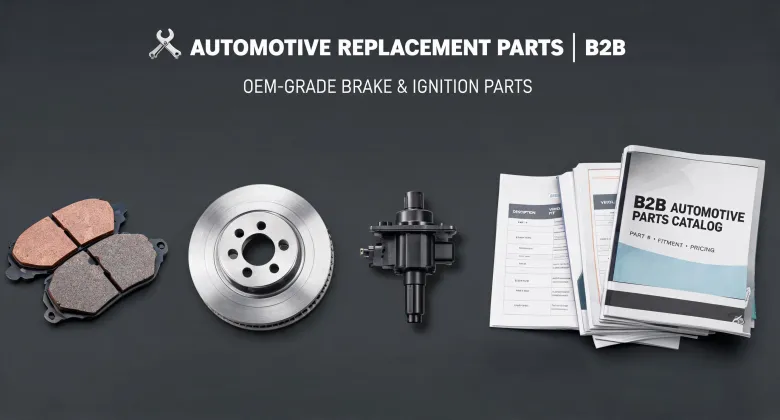
The same thing happened with a Bendix brake shoe order. We had a spec for a specific friction compound. A cheaper brake shoe from an online marketplace met the physical size but not the heat rating. In a loaded pickup, it faded going down a long grade. We caught it during inspection before it caused an accident, but we had to rebox 120 brake shoes and redo brake jobs on 30 vehicles. The $11 per set saved on shoes turned into $2,400 in labor. It wasn't a bargain.
Specification confusion is another hidden cost
After those setbacks, I started looking for patterns. What I found is that many buying mistakes aren't about cheap versus expensive. They're about ambiguous specs. And ambiguity has a real cost.
A perfect example is the question we hear from new buyers: deck belt vs drive belt—what's the difference? To someone who's never replaced a lawn mower belt, they look like the same rubber-and-polyester loop. But a deck belt has a different cross-section, length, and tension rating than a drive belt. If you order 250 of the wrong one, the return shipping alone eats any savings.
I made that error in 2019. I ordered drive belts for what was actually a deck belt application. We didn't know until the first install attempt. The belts were too short to reach the spindle pulleys. We paid $180 to ship them back, restocked at 70% of the invoice, and lost a week. All because no one confirmed the application before clicking buy.
The same logic applies to an exhaust pipe for cars. It seems like a commodity part: a metal tube with flanges, right? But the material grade matters. In 2022, I approved a quote for an exhaust pipe for cars that was 35% below the standard part. The drawing called for 409 stainless steel. The cheap pipe was aluminized carbon steel. It looked fine in the warehouse, but the first corrosion hole appeared in seven months. We replaced the whole batch under warranty. The original 409 pipe would have cost less than the labor from the warranty rework.
TCO isn't just for auto parts
Here's the part that convinced me the whole team needed a total cost of ownership mindset: a Mitsubishi mini split thermostat.
I know, it's not a car part. But my HVAC contractor had a good story. A customer wanted to save money on a compatible thermostat for their Mitsubishi mini split system. The replacement was about half the price of the genuine Mitsubishi mini split thermostat. It ran for two days, then the unit started cycling wrong between heat and fan mode. The service call cost more than the price difference, and the customer bought the genuine thermostat anyway. The cheap one is still sitting in a drawer.
I use that story in new-hire training. If you don't understand compatibility, communication protocols, and failure modes, you aren't comparing the same product at all. You're comparing a sticker price and a guess.
But does that mean you should always buy the brand-name part?
No. That would be the opposite mistake. I've approved plenty of no-name parts that worked fine, and I've seen premium parts fail early. The point isn't to buy the most expensive option. The point is to buy based on total cost of ownership (TCO), which includes the price, logistics, compatibility risk, failure cost, and the cost of your own time.
A low-priced component is only a good deal if it meets the spec and you can quantify the risk. If a supplier's quote looks too cheap, I ask why. I check the spec sheet. I check the return policy. I check the warranty. Then I calculate what happens if the part fails—in labor, downtime, and credibility. That number should be part of the purchasing decision, not an afterthought.
We've caught 47 potential ordering errors in the past 18 months using a simple pre-order checklist. That checklist started after a $3,200 mistake that still makes me wince. It has saved us a lot more than $3,200. The biggest savings came from deciding to not buy the cheap version of a part we weren't sure about.
My rule now
I still look at unit price. I still negotiate. But I never approve an order based on price alone. Whether it's a Bendix drive starter motor, a Bendix brake shoe, an exhaust pipe for cars, or even a Mitsubishi mini split thermostat, the question is always the same: what does this part really cost if the order goes sideways?
That question has changed my buying decisions more than any discount code ever did. The cheapest part is rarely the cheapest part. I learned that the hard way, so you don't have to.