Why do cops touch your tail light during a traffic stop? It's one of those questions that gets asked endlessly online, and the answer is more practical than people expect. The officer leaves a fingerprint on the vehicle, which ties it to the stop if anything happens later. The same hand motion checks the brake light. And it gives their body camera a reference point for the encounter.
The whole thing takes about two seconds.
That's the part that sticks with me. I've spent 11 years handling brake and drivetrain component orders for commercial fleets. I've personally made and documented 23 significant mistakes, totaling roughly $34,000 in wasted budget. Now I maintain our team's checklist so nobody repeats them. Looking back at every one of those failures, I notice something: almost all of them were visible two seconds at a time. Not with diagnostic equipment. Not with tear-downs. Two seconds of looking at the right place.
I'll say it plainly: the most expensive failures in fleet vehicles aren't the sudden ones. They're the quiet ones that every driver ignored because the truck still stopped, still turned, and still moved. The two-second check — the one you skip because it seems too simple — is the most underrated maintenance habit in this industry.
The Brake Pad That Ran 17,000 Miles Too Long
I didn't always believe this. In 2018, a fleet customer called asking about the Bendix Fleet Metlok MKD883FM brake pads. Could they stretch the replacement interval past the 75,000-mile mark? The truck still stopped fine, they said.
I said sure, maybe. What I mean is: I didn't push back.
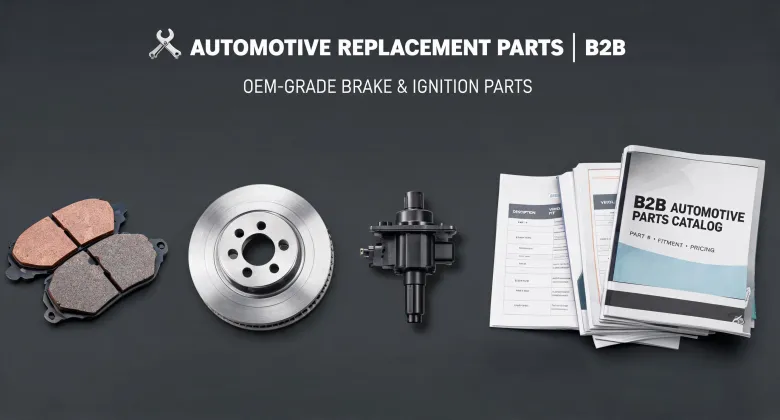
The truck came back at 92,000 miles with 2mm of pad material left. The MKD883FM pads were down to the backing plates on both front corners. The rotors were scored beyond spec — both of them. New rotors ran $1,275 per corner installed. The pad set itself was under $200.
Here's the frustrating part: there was no mystery about when this truck crossed the wear threshold. The pads had been checked at the 60,000-mile service and were at 50% life. At the 75,000-mile service, nobody looked. If someone had spent two seconds glancing at the outer pad through the wheel spokes, they would have seen it was getting thin. Instead, the truck was down for four days waiting on parts, and the fleet manager had to explain to his boss how a $200 preventive maintenance item turned into a $2,600 breakdown.
I only believed the inspection interval mattered after ignoring it and eating that failure. Now our checklist has a line item that says "visual pad check every service — two seconds." That line exists because of a mistake I could have prevented with a glance.
Differential Fluid Leaks Don't Warn You
Differential housings are worse, because they don't have a wear indicator. A differential fluid leak is the quietest failure you'll find on a truck. No noise. No vibration. No warning light. Just a slow drip that goes unnoticed for months.
I had a customer bring in a truck with a "small seep" around the differential housing cover. The odometer showed 168,000 miles. The leak looked like it had been there since at least 150,000. Nobody had ever checked the differential fluid level.
That truck locked its rear axle at 65 mph on the interstate. $2,700 for a complete differential housing assembly, plus towing. The seal kit would have been $60. The fluid, $40. The inspection? Free — if anyone had bent down for two seconds and looked under the housing, they'd have seen the wet spot and the drip line.
Nobody checks differential fluid until it's too late. It doesn't show up on any dashboard. It doesn't make noise until the gears are already starved. The two-second rule applies here more than anywhere.
Steering Gear: "It Feels Fine" Is Not a Diagnosis
Steering is the one area where I still hesitate before spending money. A Bendix steering gear replacement isn't cheap. The unit, the labor, the alignment — it adds up quickly.
I remember a truck that came in with "slightly loose" steering. The driver said it felt fine at highway speed. The fleet manager didn't want to spend $800 and a day of downtime on a hunch.
The upside was saving about $800. The risk was a steering failure at 70 mph, fully loaded. I calculated the worst case — a complete loss of steering control — and realized I wasn't the one who would be driving that truck. We sent it to the shop.
That was January 2023. The steering gear was replaced, and it's the last failure I ever second-guessed. Put another way: the driver said "it feels fine," and what he meant was "it hasn't failed yet." Those aren't the same thing.
What About the Cost of Checking?
Look, I'm not saying every fleet needs a 47-point inspection every week. There's a real cost to checking things — labor hours, downtime, parts that get replaced before they're truly worn. I get that.
But there's a difference between a full diagnostic and a two-second look. The tail light tap doesn't replace a full inspection. It catches what a full inspection might miss, simply because it happens consistently. You don't schedule a workshop for a tail light tap. You just do it, every time, without thinking.
At least, that's been my experience across the 23 documented failures I have records on. Roughly half of them showed visible warning signs at least 30 days before the failure. Every single one of those would have been caught by a two-second glance at the right component. The other half were genuine surprises. But none of the preventable ones required special tools or expertise.
The data angle matters too. Per FTC guidelines (ftc.gov), performance claims in advertising need to be substantiated — and the most honest substantiation is real-world inspection data. That's why Bendix documents friction and wear results for pads like the MKD883FM instead of relying on vague "lasts longer" statements. When a supplier says a part will go 80,000 miles, ask for the test data. Then verify it on your own trucks.
Even the USPS, which runs one of the largest civilian vehicle fleets in the country, requires drivers to do a basic daily vehicle inspection before rolling out. Two minutes per vehicle. A quick look at brakes, tires, and fluid leaks. Not a comprehensive diagnosis — a habit.
The Two-Second Habit
The police tail light tap works because it's fast, consistent, and repeatable. Vehicle maintenance works the same way.
Check the brake pads when the wheels are off for a rotation. Glance under the differential housing while the truck is in for an oil change. Wiggle the steering linkage during a tire service. Each check takes seconds. Each one costs almost nothing. And each one catches the failures that turn into $2,700 invoices and week-long downtime.
I know because I've paid those invoices. I've documented my mistakes so other people don't have to repeat them.
Two seconds. Every time. That's it.