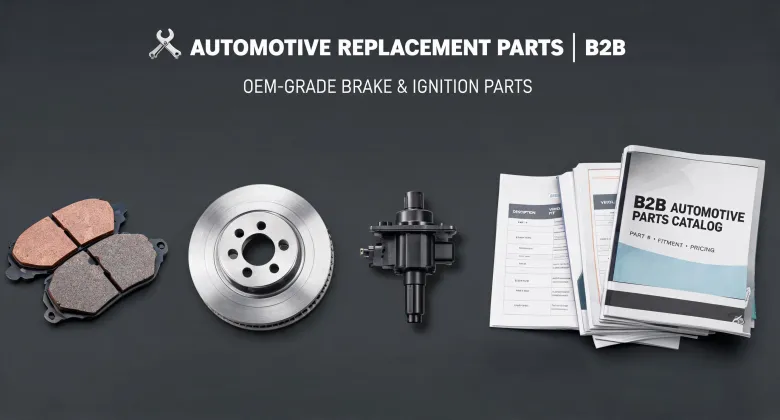
I’m a quality/compliance manager at a Bendix metal forming facility. When I’m not on the plant floor, I review roughly 200 part lots a year—stamped brackets, CNC-machined mounts, forged links, and aluminum extrusions for commercial vehicle brake systems. I rejected just under 9% of first deliveries in 2024 because the spec didn’t match what the customer actually ordered. That experience shapes how I answer repair questions.
There’s no universal answer to “should I install this Bendix air disc brake rotor replacement?” or “will a Bendix caliper cross reference work?” It depends on which of three scenarios you’re in: direct replacement, cross-reference, or stopgap repair.
This is accurate as of early 2025. Part numbers and applications change fast, so verify current specs before ordering.
Scenario 1: Direct replacement—stay close to the original spec
If you’re dealing with a Bendix air disc brake rotor replacement for a truck in normal service, the rule is simple: match the original spec. Same diameter, same thickness, same hat height, same venting, same bolt pattern. Don’t turn a safety-critical part into an experiment.
That sounds obvious, but in Q1 2024 our quality audit caught a batch of 500 rotor mounting brackets with a 0.4 mm offset. The parts bolted up and the caliper still fit, but the pad contact patch shifted. The customer failed the vehicle test because of brake judder. That redo cost us $18,000. The root cause? Someone thought “it fits” was the same as “it matches.” It isn’t.
Before you order a rotor, do the measurement correctly. Check thickness in the lowest area of the disc face, not the unworn outer edge. If the rotor is above minimum but still judders, look at pad transfer and caliper slide pins first. Replacing a rotor without fixing the caliper just creates a new rotor with the same problem.
To be fair, drilled or slotted rotors have a place. That place is track use or severe duty, not most daily-driven vehicles. For normal road service, the extra stress risers and accelerated rotor wear usually make things worse. I’d argue that’s the scenario where common advice gets it backwards.
Scenario 2: Cross-reference—a filter, not a final answer
Here’s the part I deal with constantly: Bendix caliper cross reference. Cross-references are a starting point, not a guarantee. They tell you the mounting holes line up and the piston bore is close. They don’t tell you whether the inlet thread orientation clears your brake line, whether the bleeder screw points away from the frame rail, or whether the seal material works with the fluid you use.
In 2022, our shop truck needed a front caliper. We used a cross-reference that claimed direct replacement. It bolted on, but the bleeder screw pointed straight at the frame rail. That’s not a defective part; it’s an application mismatch. We lost a day returning it and installing the correct one.
The surprise wasn’t the price difference. It was how much hidden time a supposedly “same” part number can eat if you don’t check everything. According to Bendix service documentation (2024), a caliper cross-reference is valid only when the mounting bolt pattern and piston bore diameter both match the original. If either one is off, it’s a deal-breaker.
Here’s a quick verification list I use before accepting any cross-reference:
- Bolt pattern and bracket pilot diameter
- Piston bore diameter and seal material
- Hydraulic port location and banjo thread size
- Bleeder screw orientation with the chassis
If you can’t confirm these, use the original part number or ask for a dimensional drawing. That’s not an insult; it’s basic quality. In our plant, we send drawings for every custom bracket we produce.
Scenario 3: Stopgap repairs and accessory installs
This is where “it depends” gets real. Three examples:
Spray for serpentine belt noise
If you’re reaching for a spray for serpentine belt noise, ask why the belt is noisy. If the belt is new and the noise comes from a little glaze or storage dust, a spray can genuinely solve it. That’s a no-brainer. If the belt is old or the tensioner is weak, the spray is just masking a slipping accessory drive. The noise may disappear for a day, but the belt can still flip or shred.
I’m not against belt dressing. I’m against using it before checking the tensioner and pulley alignment. In our plant, maintenance calls that “fingerprinting”—polishing the symptom instead of finding the cause. Bottom line: if you have to make a temporary fix, write the date on the can. A stopgap without an expiration is a breakdown waiting to happen.
Dual tip muffler
Another common one: “will a dual tip muffler make my truck sound better?” Maybe. But the internal pipe diameter and baffle design determine flow and tone, not the number of tips. A dual tip muffler with the same internal volume and outlet area as the single-tip version is basically a costume change.
If you want looks, get it. If you’re expecting more power, ask for the flow spec first. I’ll be honest: our plant doesn’t make mufflers. We make stamped exhaust hangers and brackets. That boundary matters. A supplier who says “we can do anything” usually means they haven’t tested their limits. I’d rather tell a customer, “this isn’t our strength—here’s who does it better.” That earns trust for the parts we do make.
What happens if you drive with a blown head gasket?
Short term: rough idle, white smoke from the tailpipe, bubbling in the coolant, maybe an overheating gauge. Medium term: combustion gases pressurize the cooling system, push coolant out, and the engine temperature climbs. Long term: coolant mixes with oil, bearings fail, and the engine is done.
I explain it with a die analogy. A cracked stamping die can make acceptable parts for a little while. By the fiftieth hit, the part is scrap and the die is broken. A head gasket failure is the same idea—a sudden loss of containment is not a stopgap situation. Drive it to a safe place, not to work. The exact damage time depends on how big the leak is and how hard you drive it, but “what happens if you drive with a blown head gasket” always has the same answer: it gets more expensive the longer you drive.
How to decide which scenario you’re in
Before you order any part, ask three questions:
- Is the component safety-critical? Rotors, calipers, and head gaskets are. If yes, treat it as a replacement, not a stopgap.
- Do you know the root cause? A belt chirp can be a misaligned tensioner. A brake judder can be pad transfer, not a bad rotor. Identify the cause before buying the fix.
- Are you upgrading or restoring? If you’re upgrading, change one variable at a time. If you’re restoring, match the original spec.
Then get the part number and measure. A Bendix air disc brake rotor has the minimum thickness cast into the hat. A caliper has the piston bore size and date code. If the numbers don’t match, that’s a red flag.
The cheapest part isn’t the lowest total cost. The total cost includes the part, labor, downtime, rework, and the next repair caused by an ignored mismatch.
In my experience, most of the confusion comes from using a cross-reference when you’re actually in a stopgap situation—or using a stopgap when you’re actually in a replacement situation. There are no universal answers, only scenarios. Direct replacement needs original spec. Cross-reference needs extra verification. Stopgap needs an expiration date. If a supplier or mechanic gives you one-size-fits-all advice, ask which scenario they’re solving for.