If you've ever had a 2011 Dodge Caravan pull into the bay on a Friday afternoon with a clunk over bumps and a squeal when braking, you know the feeling. The customer wants it done before pickup. The parts room has nothing in stock. And every promise you make is suddenly personal.
In my role coordinating emergency parts shipments for an aftermarket auto parts distributor, I've handled more than 1,200 rush orders in 14 years, including same-day turnarounds for fleet customers that needed a running van by 6 AM. So this isn't a 'buy OEM because OEM is safer' article. It's a 'what will actually show up and work' comparison.
We're putting two paths side by side: OEM dealer parts vs. quality aftermarket parts, specifically the Bendix SBC1258 Stop by Bendix brake pad set and the Bendix brake rotor PRT5619. Here's how those options compare when the clock is ticking.
First, let's define the comparison framework
Before comparing parts, compare what matters. In emergency repairs, four dimensions decide the outcome: diagnosis accuracy, fit and hardware, cost and lead time, and system risk. Every one of those can flip a decision.
One framing note: aftermarket doesn't automatically mean no-name or 'one tier below.' Bendix is a legitimate brand with real engineering. The question isn't 'store brand vs. dealership.' It's whether a calibrated alternative can save you the grief of a second repair.
Dimension 1: What does a bad sway bar link sound like?
Let's start with the phrase everyone lands on: what does a bad sway bar link sound like? On a 2011 Dodge Caravan, it's usually a low clunk or rattle when you hit a pothole, speed bump, or uneven driveway. The sound is one-sided, and it doesn't change when you touch the brake pedal.
Worn brake pads are different. They make a high-pitched squeal when you apply the brakes. If the rotor is scored or glazed, you might even feel a pulse in the pedal. In theory, that's enough to tell them apart.
Everything I'd read about diagnosing suspension noise said you can separate the two by ear. In practice, I found that on a 2011 Dodge Caravan with high mileage, you often get both at the same time. The clunk masks the squeal until you're braking and turning at once. That's why you have to get the van on the lift, look at the sway bar link boots, check pad thickness, and spin the rotors before ordering anything.
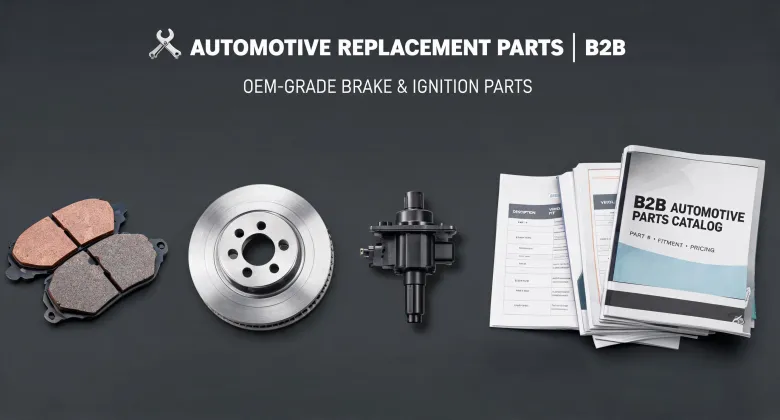
If the diagnosis lands on brakes, the Bendix SBC1258 Stop by Bendix brake pad set is the aftermarket replacement I've shipped more than a few times. It comes with clips and shims, which sounds boring until you realize missing clips cause comebacks. If the rotor is scored, the Bendix brake rotor PRT5619 is the matching disc. Both are built to OE form factors, which leads to the next comparison.
Dimension 2: Fit and hardware: OEM vs. Bendix
OEM wins fit by definition. The factory part is the exact part that left the assembly line. But fit is not magic. It's about holes lining up, edges clearing the caliper, and the pad sitting flat in the bracket. A good aftermarket part can meet those requirements too.
The Bendix SBC1258 Stop by Bendix brake pad set includes OE-style shims, chamfered edges, and a friction compound matched to the Caravan's weight. The PRT5619 rotor has corrosion protection on the hub and a finished friction surface. Those details matter because rust on the hub face can cause a rotor to sit slightly crooked, which turns into a brake pedal pulse later.
Honestly, the gap between OEM and Bendix is narrower than most people think. I don't have hard data on industry-wide rotor runout percentages, but based on the 200-plus Bendix orders I've expedited, mispackaging or dimension issues happen maybe 1-2% of the time. That's not zero, and it's not enough to scare you away. It's enough to inspect the part before you install it.
Dimension 3: Cost and lead time
Here is where the comparison hurts OEM. A new OEM 2011 Dodge Caravan alternator can run $350 to $450, based on supplier quotes I saw in 2024. A well-reviewed remanufactured alternator goes for $180 to $280. For brakes, the Bendix pad set and rotor together often save $60 to $100 compared to dealer parts. Prices change, so verify current rates with your local suppliers.
Lead times are the bigger deal-breaker. OEM 'next day' from a dealer still depends on the dealer's own inventory. If the part has to come from a regional warehouse, you're looking at two to four days. For a shop that promised the van back by 8 AM, that doesn't work.
In March 2024, a client called at 3:45 PM needing a 2011 Dodge Caravan alternator for a job they had to finish by 8 AM. Normal dealer ETA was two days. We found a reman alternator at a local supplier, paid an $80 rush fee on top of the $220 base price, and had it delivered by 7 PM. The client's alternative was losing a $1,800 fleet service contract. That's what lead time actually buys you.
Shipping adds another variable. According to USPS (usps.com), First-Class Mail delivery is typically one to five business days. That's fine for a gasket or a wear sensor. It's not fine for a 2011 Dodge Caravan alternator. For heavy parts, use a freight service or courier and pay for the speed.
Dimension 4: System risk: Alternator vs. ignition coils
Last dimension is the one people skip until it's too late: what else can fail after the new part goes in? Here the comparison isn't only OEM vs aftermarket. It's 'diagnose carefully' vs 'do the job twice.'
A 2011 Dodge Caravan alternator failure typically shows up as a battery light, dim headlights, or a slow crank. A failing ignition coil shows up as a misfire, rough idle, or a flashing check-engine light. The symptoms can overlap, so before ordering coils, pull up a coil ignition system diagram. It shows the cylinder layout and firing order, and it prevents the classic mistake of ordering a coil for the front bank when the rear bank is the actual problem. Trust me on this one.
The system-risk comparison is stark: replacing the 2011 Dodge Caravan alternator is roughly a 45-minute job. Replacing the rear ignition coils on the 3.6-liter engine can require intake manifold removal and close to three hours of labor. If a $50 coil fails in six months, you're paying for that three-hour job again. OEM or quality aftermarket is worth the extra money there.
Here's something vendors won't tell you: 'in stock' doesn't mean 'on a truck bound for you.' I've had suppliers say a coil ignition system diagram makes it easy to order the right part, then discover the part had to come from a distributor 500 miles away. When a deadline matters, ask if the part is physically on the shelf. If they hesitate, that's your signal.
So which is the better choice?
Let's avoid a blanket 'OEM always wins' answer. That would ignore every rush order I've seen saved by a quality aftermarket part. Instead, use this decision matrix.
- Choose OEM when the vehicle is under warranty, the customer will accept the wait, or the aftermarket part has no reputation behind it. OEM also makes sense for the 2011 Dodge Caravan alternator if the dealer can deliver on time.
- Choose Bendix or another quality aftermarket brand when you need the brake parts today, when you want to save money without gambling, or when you're doing a complete brake job. The Bendix SBC1258 Stop by Bendix brake pad set and the Bendix brake rotor PRT5619 are legitimate options for this Caravan.
- Diagnose before choosing. A bad sway bar link sound can mask brake wear, and a failing alternator can look like an ignition issue. Use the coil ignition system diagram, check voltage, and inspect the suspension before you commit to a part.
Per FTC guidelines (ftc.gov), you have the right to see a warranty before buying an aftermarket part. If a supplier advertises 'lifetime warranty' on Bendix pads and doesn't give you written terms, treat that as a red flag. A warranty is only as good as the paperwork.
Bottom line
Bottom line: the best part isn't the one with the more expensive logo. It's the one that fits, arrives on time, and doesn't fail after installation. That sounds obvious, but I've watched too many emergency orders go wrong because someone chose based on price or brand loyalty instead of lead time and hardware contents.
Take it from someone who has paid for $80 courier runs and then watched the truck sit in traffic: add a buffer. If the supplier says two hours, plan for four. If you can, order parts before the final diagnosis based on common wear like a bad sway bar link, then cancel if you're wrong. This approach worked for us in a mid-size parts network with multiple depots. If you're in a rural area, the calculus is different; you'd need to keep more inventory on hand.
Whatever route you take, keep the comparison running: what happens if the part doesn't show, and what happens if it's the wrong part. That's the real emergency, and it's the one you can prepare for.