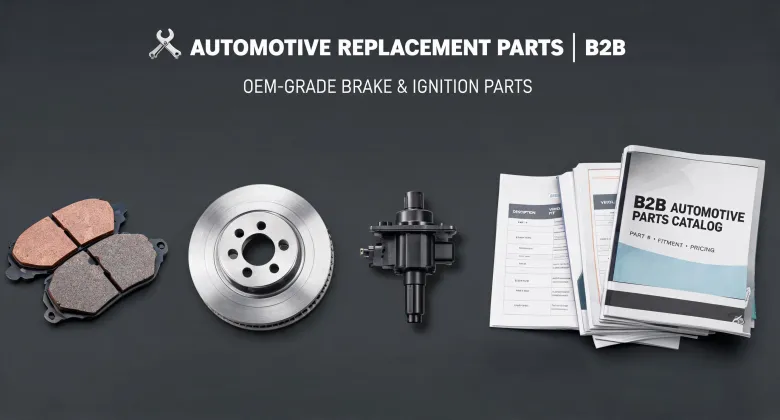
The Comparison Framework
I've handled automotive parts sourcing for 12 years. I've personally made and documented 23 significant mistakes, totaling roughly $26,000 in wasted budget. I now maintain our team's pre-order checklist so nobody repeats my errors. This article is not a Bendix brochure. It's a set of comparisons I wish I'd seen before writing my first serious purchase order.
When I compare brake components, I use three criteria: fit integrity, manufacturing consistency, and test data. The same criteria apply to suspension parts and aftermarket upgrades. Here's what I learned.
In my first year (2013), I made the classic specification error: assumed 'standard' meant the same thing to every vendor. It cost me a $600 redo. That's why the first dimension of any comparison is always the part's physical intent, not its part number.
Bendix Brake Caliper vs. Budget Rebuild
Take the Bendix brake caliper. On paper, a remanufactured caliper from a non-name supplier can look identical: same castings, same piston size, same bracket. But fit integrity isn't just bolt holes. It's how the caliper sits relative to the rotor, how the bleed screw aligns, and whether the piston seal is seated within spec.
In 2022, a budget brake caliper arrived with a crooked bleeder thread. It wasn't noticeable in the box. It cost us 18 minutes per vehicle after installation. On a 40-vehicle order, that's 12 hours of labor. The Bendix version, in my experience, has never had that issue. Not because Bendix never makes mistakes. Because the inspection criteria are different.
Conclusion: If you order for a fleet or a production line, the Bendix brake caliper is the safer choice. If you're building a weekend car and can inspect every unit, a budget reman can work. But 'tempting' is not a quality plan.
Bendix Brake Rotor PRT5619 vs. No-Name Castings
Now the Bendix brake rotor PRT5619. This is a part I've ordered more than a few times. The comparison dimension here is manufacturing consistency. Rotor runout and thickness variation are not cosmetic. They are measured in microns.
On the PRT5619, the friction surface is machined to a consistent finish, and the top hat is clean. On some budget rotors, I've seen rust scale left in the vent slots. That's not about appearance; it's about out-of-box rotor imbalance. Vibration starts at 70 mph.
In 2019 I ordered 80 rotors from an eBay supplier. Each one looked fine. Nine had runout above spec. We measured them only because our checklist required it after the 'standard' incident. The total cost: $650 in extra labor, $280 in shipping for returns, and a 3-day production delay. I still kick myself for not starting with a known part number.
Conclusion: The Bendix brake rotor PRT5619 has been consistent for us. But here's the twist: the budget rotor isn't always bad. In a low-usage, low-speed trailer application, maybe it's fine. On a delivery vehicle? No. The comparison result depends on duty cycle.
Upper Ball Joint: Same Logic, Different Tolerances
Now the upper ball joint. I'm including this because suspension parts get treated differently than brakes, and they shouldn't. The comparison is still about movement and friction. A cheap upper ball joint might have the same thread pitch and taper angle, but the internal bearing surface matters.
One of my biggest regrets: not checking taper fit on a batch of universal ball joints. They fit in the spindle by hand, but under torque they did not seat. The 'universal' design didn't account for the exact taper. We caught it when the alignment shop called. $900 wasted.
Does that mean you should only buy genuine OEM? No. It means when someone asks 'which upper ball joint should I order?' the real question is: what's your inspection protocol? If you can measure taper angle and check for binding, you have more options. If not, stick with a brand that lists actual part numbers, not 'fits most vehicles.'
Rekluse Clutch Kit vs. OEM Clutch: A Different Comparison
This is where the traditional comparison flips. A Rekluse clutch kit is not a budget alternative to an OEM clutch. It's a different category. For a motorcycle, the comparison isn't price; it's capability.
The A vs. B here: stock clutch and cable pull vs. Rekluse auto-clutch with centrifugal engagement. If you want to focus on terrain rather than modulation, the Rekluse clutch kit wins. If you need a predictable lever for regular street commuting, the stock clutch may be better. What surprised me: the Rekluse kit can reduce clutch lever fatigue, but it adds complexity during installation and setup.
Conclusion: Don't force every purchase into the same A/B box. Sometimes the right comparison is 'new problem, new tool.' The best part isn't the one with the better spec; it's the one that fits the job.
Why Data Beats Reputation
Reputation is a lagging indicator. Data is a leading one. The 1971–72 Los Angeles Lakers own the best point differential NBA history has recorded—not just a winning streak. That margin predicted their title. The same logic applies to parts.
Instead of asking 'is Bendix good?' ask 'what's the measured failure rate in this application?' For the Bendix brake caliper and Bendix brake rotor PRT5619, I trust the data we've collected across 200+ orders. For a generic upper ball joint, I only trust data from a specific manufacturer, not a category. For a Rekluse clutch kit, I trust the dyno charts, but only after verifying the vehicle's primary use.
The fundamentals haven't changed. But the execution has transformed.
What was best practice in 2020 may not apply in 2025. Measurement tools are cheaper. Part data is more accessible. If you still approve bulk orders on reputation alone, you're leaving money on the table.
Scenario-Based Selection Guide
Here's how I apply these comparisons when I sit down to write a PO.
- Fleet or production line: Choose the Bendix brake caliper and Bendix brake rotor PRT5619. Inspect on arrival. Document runout before installation.
- Budget low-duty application: Accept budget components only if you have a measurement protocol. No measurements, no bulk order.
- Specialty motorcycle use: Choose a Rekluse clutch kit if the rider needs clutchless operation in technical terrain. Choose stock if simplicity matters more than terrain focus.
- Steering/suspension: Verify taper angle and torque specs for any upper ball joint before committing to a part number. Don't rely on 'fits most vehicles.'
That checklist has caught 47 potential errors in the past 18 months. Some were small. Some would have been expensive. All of them were preventable.