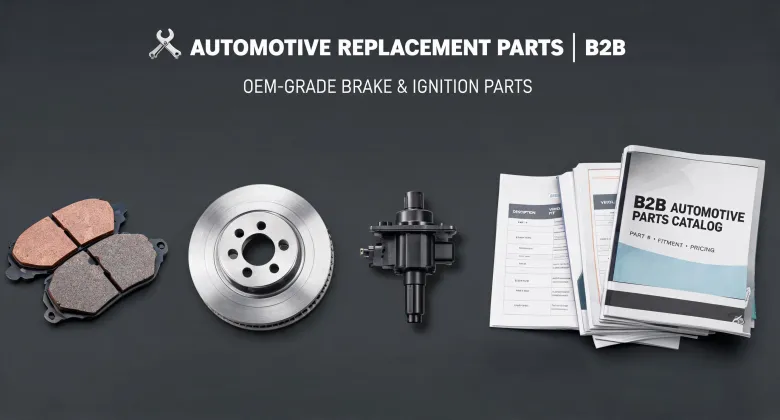
If you're managing a fleet or sourcing parts for a facility, you've probably seen Bendix brake pads, starters, and fuel system components with wildly different price tags. Some of that difference is brand markup. But a lot of it comes down to one thing: what exactly you're buying.
In my role coordinating urgent parts orders for repair shops and fleet operators, I've dealt with enough emergency replacements to know that a cheap part can become a very expensive problem—fast. This guide lays out the five steps I use to identify whether a Bendix part is a genuine OEM unit, an aftermarket replacement, or a used pull-off. It's a simple checklist, but it saves you from a whole lot of trouble down the road.
Why This Matters More Than You Think
The difference between an Original Equipment (OE) part and an aftermarket part isn't always about quality. Sometimes it's just about sourcing. But the difference between a new part and a used one is a completely different story—especially for components like the Bendix Gear starter motor or a high pressure oil pump, where internal wear directly impacts performance.
The 5-Step Verification Checklist
Step 1: Check the Part Number Format (The Non-Obvious One)
Most people skip this. They just look at the brand name and the box. But Bendix, like most OEM suppliers, uses a specific format for their engineering part numbers. Genuine Bendix parts usually have a long, technical string of numbers and letters. Aftermarket manufacturers sometimes try to mimic this, but you'll often see slight deviations—a shorter sequence, or a different placement of the dash.
Find the manufacturer's number, not just the box's barcode. If it looks too clean or too generic, that's a red flag.
Step 2: Examine the Physical Build Quality
This is where the 'hands-on' part comes in. Look at the Bendix Fleet Metlok MKD1770FM brake pads, for example. The friction material on OE or high-quality aftermarket pads is bonded to the backing plate with a clean, uniform finish. Lower-grade parts often have rough edges or inconsistent paint/coating.
- Genuine/OE: Flawless finish, no excess adhesive, precise shims.
- Aftermarket (Good): Slightly different branding, but solid construction.
- Used: Signs of wear, rust on the backing plate, reduced friction material thickness.
Step 3: Check the Contact Surface for a 'Break-In' Pattern
If you're looking at a high pressure oil pump or a starter motor, the contact surfaces tell the story. A new part—whether OE or aftermarket—has a smooth, uniform machine finish. A used part will show scuffing, heat discoloration (often a blue or brown tint on steel), or a polished 'wear pattern' from the previous owner.
Honestly, I'm not sure why buyers don't check this more often. My best guess is that online listings look clean, and by the time the part arrives, you're in the middle of a repair. Don't skip this step just because it's new in the box. I've seen used parts repackaged to look new (surprise, surprise).
Step 4: Trace the Sourcing Documentation
Now, this is the step procurement people hate. Ask the seller directly: Is this a genuine Bendix part, sourced from an authorized distributor? Or is it an aftermarket equivalent? Request the invoice or the SDS (Supplier Declaration of Conformity). If you're buying from a reseller on eBay or a random surplus shop, you're probably not getting OE. If you're buying from a national distributor, you probably are.
Calculated the worst case once: I bought 'genuine' parts for a rush job, paid expedited shipping, and they turned out to be aftermarket units. The fit was fine, but the client had to validate them, costing us 3 hours of labor and a lot of trust. The expected value of asking the question upfront is way higher.
Step 5: The 'Too Specific' Price Check
Everyone knows that if a price is too low, it's suspicious. But there's a smarter check. If a seller has a consistent stock of a very specific part—like the Bendix Gear starter motor—at the exact same 'discount' price, ask why. It might be because they bought a failed run, or because they're the OEM outlet.
In March 2024, 36 hours before a deadline, a client called needing a starter motor for a box truck. Our usual supplier quoted a reasonable rate but couldn't guarantee delivery. The client's alternative was missing their load schedule. We fund a vendor with surplus stock, paid 15% more, and checked it with a multimeter before the tow truck arrived. The client's alternative was a $50,000 penalty clause. Looking back, I should have verified the serial number batch codes first, but given how tight the timeline was, the visual check had to do.
When to Avoid Used Parts (And Sometimes Aftermarket)
I have mixed feelings about used parts. On one hand, for small trim items or housings, they're fine. On the other hand, they absolutely do not belong on safety-critical or wear-sensitive systems.
If you're dealing with a high pressure oil pump or any fuel system component, do not install a used part. The internal tolerances are too tight, and debris from the previous engine can kill the new unit. The same goes for coil springs. Symptoms like a knocking noise or a vehicle sitting unevenly are often traced to bad springs, and yes—you can sometimes find used ones cheap. But a set of used coil springs is a gamble where the house always wins. I'd say 80% of the time, buying new aftermarket is the right call.
Quick Checks for Related Components
Bad Coil Spring Symptoms
If you're chasing a noise or ride issue, here's what to look for: a broken coil is often visibly rusted or snapped near the base, the vehicle may sit lower on one side, and you'll hear a clunk over bumps. No.
What is a Resonator in a Car?
While we're on the topic of exhaust systems—a resonator is basically a chamber that cancels out specific sound frequencies to reduce drone or rasp. It's not the muffler. A resonator is about tuning sound, while a muffler does the heavy lifting on volume. If you're replacing exhaust parts, don't confuse the two.
The Bottom Line
Buying Bendix parts for your fleet means buying certainty. The value of genuine OE isn't the same—it's the certainty that the part will perform as designed. It's also about communication. If you tell your supplier you need a part for an emergency, and they send you a used unit dressed as new, that sets everyone up for failure.
My last piece of advice: build a relationship with a supplier who will tell you 'no.' The one who says "you're better off with the OE version for this starter motor" is the one who saves your bacon when it counts. (Mental note: I really should write down our supplier's return policy for used parts—it's saved us before.)
Note on Pricing: Pricing data for Bendix parts is volatile and varies by region and distributor. Verify current list prices with your local authorized dealer as rates may have changed.
Now, go check that part number. It takes thirty seconds, and it's the difference between a repair done right and a repair done twice.