I've been handling parts orders for a small automotive machine shop for six years. In that time, I've personally approved—and documented—roughly $14,000 worth of mistakes. The worst one involved a BBC water pump pulley that looked perfect but didn't align. This is the checklist I wish someone handed me before I spent that money.
Before we start: I'm not an engineer. I'm not here to sell you the most expensive option. I'm a parts counter guy with a paper trail. What works for our shop's street-driven builds may not work for a track car. Keep that in mind.
Bendix Brake Rotors Review: PRT5259 Is Not a Performance Rotor
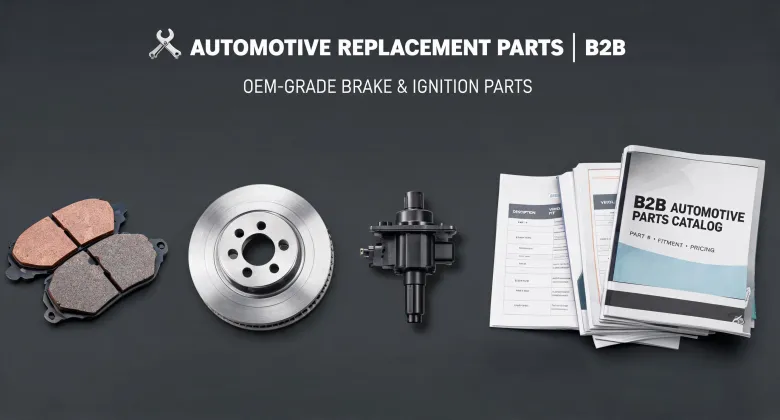
Let's get the obvious thing out of the way. The Bendix brake rotor PRT5259 is not a fancy high-performance rotor. It's a coated, one-piece replacement rotor aimed at normal driving. That doesn't make it boring. It makes it predictable.
Here's what I check first when a rotor shows up: runout. The cheap no-name rotor we tried from a supplier looked fine. It measured 0.004 in. out of the box. Within generic spec? Barely. But on that car, you could feel a slight pedal pulse. The Bendix PRT5259 measured under 0.001 in. on the same dial indicator. That difference is why I bothered writing this Bendix brake rotors review.
Another thing that confuses people is the coating. The Bendix rotor has a dark anti-corrosion coating. After a few hundred stops, the swept area wears to bare metal. Customers think it's rust or a defect. It's not. It's the coating doing its job. What I mean is: if you see a clean ring where the pads touch and coating elsewhere, that's normal.
Pricing as of March 2025, based on quotes from two suppliers: the PRT5259 was in the $80–110 range each. The no-name rotor was $50–60. Verify current prices; they move. My recommendation: PRT5259 for a street car, especially a heavier sedan or daily driver. If you're tracking the car or towing at max capacity, get a larger two-piece or vented rotor with a matched pad. Not because the Bendix is bad, but because it's built for a different job.
BBC Water Pump Pulley: Stamped vs Billet
This is the mistake that stung most. In spring 2023, I ordered a fancy billet BBC water pump pulley for a customer's big-block Chevy. I compared it to the old pulley by eye. Looked fine. It wasn't. The offset was 1/4 in. off. That meant the belt didn't line up with the alternator pulley. Squeal, belt wear, and a wasted Saturday.
The core comparison is simple: factory-style stamped steel vs aftermarket billet. The billet looks better. The stamped steel usually matches the factory accessory layout. If you're using a factory belt-drive setup, I recommend stamped steel with the same part number as original. It won't win car show points, but it aligns. You can swap to billet if it has the exact same offset, but you have to measure.
How to measure: hold a straightedge across the two pulleys. It should contact both faces evenly. If it rocks, something's off. Also check the water pump length. A short water pump vs long water pump changes the pulley depth. Ordering without measuring is how you end up with a $300 mistake.
Footnote: we didn't have a formal measure-before-order process back then. We do now. That first mistake cost $89 in parts, $40 in shipping, and three hours of labor. Maybe $300 all in. A lesson learned the hard way.
Throttle Body Intake Manifold: Single-Plane vs Dual-Plane
A throttle body intake manifold is more than a plenum with four bolt holes. The two common choices are single-plane and dual-plane. They behave differently, and the difference is not just top-end power.
Dual-plane: good low and mid-range torque, a wide powerband, forgiving on street engines with automatic transmissions. Single-plane: more high-rpm power, but it can feel flat below 3,500 or 4,000 rpm if the engine isn't built for it.
Here's the part that surprises people: a single-plane can cost you horsepower down low even if it flows more air on a flow bench. Intake runners matter. Long, narrow runners in most dual-plane intakes keep air velocity up at low rpm. Wide, short runners in a single-plane trade velocity for top-end breath. So the intake has to match the cam, heads, converter, rear gear, and exhaust. That's why asking which one is best is the wrong question. The right question is: what does the rest of the engine want?
I'm not an engine builder, so I won't recommend a specific manifold. A throttle body intake manifold choice has too many variables. What I can say from the parts counter: for a mostly-street car, dual-plane is usually the safer bet. For a weekend drag car with a big cam and converter, single-plane can be better. Deciding before the cam is wrong. (Source: my three expensive mistakes.)
How Does a Mechanical Fuel Pump Work?
Let me answer this in plain terms. How does a mechanical fuel pump work? It uses a lever, or a pushrod and lever, that rides on an eccentric lobe on the camshaft. When the lobe pushes the lever, the lever pulls a diaphragm down. That creates vacuum in the pump chamber, so fuel is drawn in through a one-way inlet valve. When the lobe rotates away, a spring pushes the diaphragm back up. That pressure closes the inlet valve and pushes fuel out through a one-way outlet valve toward the carburetor. Then the cycle repeats.
That's it. It's simple, which is why older cars and any carbureted engine use them. The pump output is tied to engine speed, but it doesn't work hard. The carburetor's needle valve regulates pressure.
Now the comparison that costs people money: rebuilt pump vs new pump. I once told a customer a rebuilt was every bit as good. The first one had a worn rocker arm and a scored pushrod. Not exactly the pump's fault, but the labor to redo it was $220. I was trying to save $35. Now I buy new or rebuild with known-good parts. If you're running ethanol fuel, check the diaphragm material before you assume it's fine.
Had one day to finish a car before a deadline, and I put an electric pump in as a temporary fix. It worked. It was also noisy, and the pressure needed a regulator. In hindsight, I should have ordered the mechanical pump and paid for next-day air.
The Honest Bottom Line
So here's my practical checklist after all this:
- Brake rotors: Bendix PRT5259 is a solid street rotor. Buy it for daily drivers. Shop for runout, not just price.
- BBC water pump pulley: measure offset before ordering. Stamped factory style is the safe default.
- Throttle body intake manifold: pick the cam first. Dual-plane for street. Single-plane if you're building for high-rpm power.
- Fuel pump: mechanical is fine for stock-ish carbureted engines. Buy new, check ethanol compatibility.
None of these are the only parts that work. There are good alternatives. But I'd rather sell you the part that matches the system than the part that makes me the most margin. If you're outside those use cases, get an engine builder who can design around your exact combo. Sometimes the cheapest part isn't the cheapest. That's the whole article.