Last spring, one of our work vans died outside the warehouse. Not a dramatic failure—just a 2016 Ford E-250 that clicked instead of started when Dave turned the key. He texted me from the shop: "starter bendix won't engage."
I stared at the word bendix and had no idea if it was a brand, a part, or a typo. That was the beginning of a lesson I couldn't afford to ignore.
Background: I buy parts for a fleet I don't drive
I'm the office administrator for a 130-person company with 22 vehicles and a small equipment maintenance shop. I manage all parts and shop supply ordering—roughly $175,000 a year across 14 vendors. I report to both operations and finance, so I'm used to answering for every dollar and every delay.
When I took over purchasing in 2021, I did it the way most people in my position do: I looked up part numbers, compared prices, and ordered. It worked fine until it didn't.
The order that almost went wrong
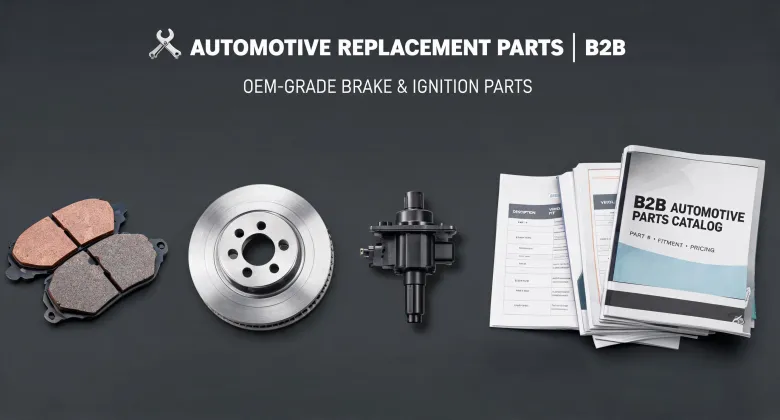
In March 2024, our vendor consolidation project made me review every part we stock. Dave's spec sheet called for the Bendix SBC999 Stop by Bendix brake pad set for one of the vans. I typed that exact title into a search engine and saw three listings. All three looked identical. One was $38 cheaper.
Everything I'd read about buying parts said compare prices and save money. But my gut said verify the application before ordering. I clicked the product spec sheet and found the issue: the cheaper listing was for a different pad shape. It wasn't the same part. The product name was the same because it was a Bendix part, but the application list didn't include our van's year.
The numbers said go with the cheaper option. My gut said check. Went with my gut. Had I ordered, Dave would've discovered the mismatch mid-job, the van would've stayed down a day, and we'd have paid restocking plus urgency shipping.
The Bendix catalog, accessed March 2024, lists the application range right below the part number. I'd never looked at it before. That was the mistake.
The part number is the promise
Dave said something I will not forget:
The part number is the promise. The brand name alone is not enough.
He's not a dramatic guy. He just orders the right parts and expects me to do the same. That one sentence changed my process.
Two weeks later, Dave sent another text. This one said the starter bendix won't engage on the E-250. This time, I didn't google the phrase. I looked up the actual part number from the service manual and sent it to our supplier. The replacement was about $85. The van was back in service in two days.
It took me two years and one near-miss to understand that a part number is not a suggestion. It's a specification. The starter bendix is a small electromechanical gear that pushes the starter drive into the flywheel. It won't last forever. It failed because that van starts a dozen times a day, every day. Not a catastrophic failure—just lack of attention.
Water pumps, spark plugs, and a belt
The same week, the grounds crew flagged their Stihl water pump. It had seized because someone stored it with water in the housing. The repair cost was one invoice and one afternoon—mostly the part and the lost rental. We now drain and tag it every fall.
And when our portable generator needed a tune-up, Dave asked for a Torch AC7R spark plug. I scribbled "AC7R" in my notebook, missing the "Torch" brand part. A quick call later I realized the code I wrote would've been meaningless. The exact brand-and-code string mattered.
Then came the question that tied it all together. Dave asked, "how much does it cost to replace the serpentine belt?" He'd spotted a small crack on another E-250's belt during a routine inspection. I called three independent shops and got quotes ranging from $180 to $265 as of January 15, 2025. Belt part cost: $28–$65. Labor: one to two hours. The cost of ignoring it can be far higher—a snapped belt can damage the tensioner and sometimes the water pump.
We replaced the belt before it broke. It cost us about $220. If we'd waited, the repair might've been $600. Not ideal. Workable. But not smart.
What I do now
I created a 12-point purchasing checklist. It's not a glamorous tool. The checklist: part number confirmed, application list checked, supplier called, price compared, availability confirmed. In that order. Every part over $50 goes through it.
That checklist sounds kinda boring, but it's the cheapest insurance I've found. It has saved us an estimated $8,000 in avoided rework and rented replacement equipment. Prevention over cure sounds like a cliché, but 5 minutes of verification beats 5 days of correction. I've learned that the hard way—not by making every mistake, but by almost making one and then watching every vendor invoice after that through the same lens.
The bottom line
I've seen this pattern many times. When I say "many," I do not mean a few. I mean across 200+ orders. The cheapest part is expensive if it's the wrong one. The best supplier is the one who answers when you're verifying a part number, not just taking an order.
That's why I still think about the word bendix every time I see a part number with a brand attached. It's not paranoia. It's just the discipline of checking before committing. And for a 22-vehicle fleet, that discipline is the cheapest maintenance I buy.