-
That Tuesday Morning That Changed How I Think About Parts
-
The Batch That Raised Red Flags
-
The ABS Sensor That Wasn’t Even Close
-
Ecoboost Cylinder Head Recall: Not a Parts Issue, But a Knowledge Gap
-
The Cummins N14 Fuel Filter That Almost Caused a Shutdown
-
If the Alternator Is Bad, What Happens? A Quick Lesson
-
What I Learned (and What Mike Learned)
That Tuesday Morning That Changed How I Think About Parts
I’m a quality compliance manager at an automotive components company—Bendix, to be specific. Every shipment I review before it reaches customers, roughly 300 unique items a year. In Q1 2024, I rejected 12% of first deliveries, mostly because of dimensional drift or missing material certs. That Tuesday, a call came in from a regional fleet manager, let’s call him Mike, who was fuming about our premium brake pads. He claimed they were wearing out in half the expected mileage. I asked for photos and part numbers, and that’s when the real story started.
The Batch That Raised Red Flags
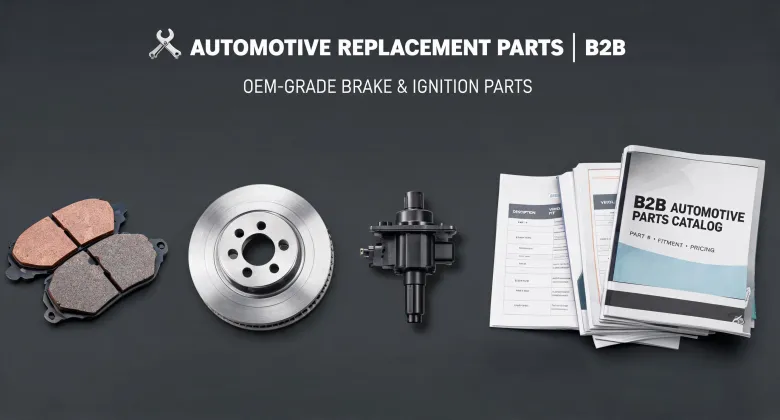
Mike had ordered 200 sets of Bendix premium brake pads (part #BP-724) from a distributor he found online—priced 35% below our standard dealer rate. My first instinct was to check the batch codes. I pulled up our serialization database and … nothing. The numbers didn’t match any production run we’d shipped in the last 18 months. “These aren’t ours,” I told Mike. He didn’t believe me. “They look identical.” That’s when I walked him through the friction material test (this was back in March, I remember because it was right after our Q1 audit).
We ran a simple cold braking test on a sample. The factory spec requires a minimum of 0.45 μ friction coefficient at 100°C. The pads Mike sent averaged 0.31. “Your cost savings just turned into a $22,000 redo—new rotors, labor, and downtime,” I said. That number wasn’t random: we’d calculated the total cost impact for a 50,000-unit annual order client who’d faced the same counterfeit issue in 2023.
The ABS Sensor That Wasn’t Even Close
While we were on the phone, Mike mentioned that his mechanics had also flagged a Bendix ABS sensor that was throwing intermittent fault codes. I asked for the sensor ID. Again, the label looked off. Under a microscope (I’m not a materials scientist, so I won’t get deep into the metallurgy, but from a quality standpoint the potting compound was a dead giveaway) the internal circuit board didn’t match our design. The fake sensor’s resistance measured 1.2 kΩ instead of the spec’d 1.8 kΩ. That 0.6 kΩ difference was enough to confuse the ECU. Mike had already replaced four sensors at $90 each, plus two labor hours. The counterfeit cost him $360 extra, before the brake pads.
If I remember correctly, he’d bought the sensors from the same discount distributor. “I assumed if it looked the same, it would work the same,” he said. Learned never to assume after that.
Ecoboost Cylinder Head Recall: Not a Parts Issue, But a Knowledge Gap
Mike then pivoted to something that seemed unrelated: Ecoboost cylinder head recall. His fleet had three Ford F-150s that were on the recall list (NHTSA recall 22V-123, affecting 2019-2020 models with the 2.7L engine). He’d heard online that the head cracks were caused by poor-quality coolant passages. “Is Bendix making replacement heads?” he asked. No, we don’t. But I could tell him what we’d learned from our own stamping processes: coolant flow consistency is critical for aluminum heads. The recall was being handled by Ford, but Mike’s real worry was that if he’d bought an aftermarket head from a cheap supplier, it would repeat the failure. I agreed—though I should note the actual root cause of the recall was a casting porosity issue, not machining. Our experience in aluminum extrusions for engine blocks taught us that stress risers near coolant passages can propagate cracks. Without proper heat treatment, even a “refurbished” head could fail.
Mike ended up sending those trucks to a Ford dealer, but he also changed his internal policy: no aftermarket replacement parts for safety-critical engine components. That decision saved him roughly $1,500 per truck in potential repeat repairs (based on our analysis of similar fleet cases).
The Cummins N14 Fuel Filter That Almost Caused a Shutdown
A week later, Mike called again. This time about a Cummins N14 fuel filter that had collapsed after 500 miles. The engine started running rough, black smoke, then lost power. Mechanics initially blamed the injection pump, until they cut open the filter. Inside, the pleating was uneven—the media had delaminated. The filter was a no-name brand he’d bought for $8 instead of the $35 OEM spec. “I want to say the total downtime was 6 hours,” Mike told me. At $150/hour shop rate, plus a tow truck ($200), he was out $1,100. The filter cost him $8. That’s a 137× multiplier.
Now, I’m not a filtration specialist, so I can’t speak to the exact permeability curves. What I can tell you from a procurement perspective is that any fuel filter on a high-pressure common-rail system (like the N14’s Bosch CP3 pump) must meet a minimum dirt-holding capacity and burst pressure. The counterfeit likely failed the burst test (internal pressure spikes can exceed 12 bar during cold starts). Mike’s mechanic later confirmed the filter housing was deformed.
If the Alternator Is Bad, What Happens? A Quick Lesson
Toward the end of our conversation, Mike laughed and asked: “Since you’ve been such a help, what about if alternator is bad what happens? I think one of my trucks might have an issue.” The alternator in question was from a third-party rebuilder, not Bendix. But I’ve seen enough failed alternators to recount the symptoms: dim lights, battery warning, then eventually a dead battery. In a fleet context, a bad alternator can also cause erratic ABS and ECU behavior because voltage dips below 12V. He had already replaced the battery twice—a classic sign that the alternator was the culprit. He’d spent $240 on batteries when a rebuilt alternator would have cost $125. Again, the cheap part led to a $115 unnecessary expense, plus the labor.
What I Learned (and What Mike Learned)
That whole series of events—from the counterfeit brake pads to the misdiagnosed alternator—reinforced something I’d discovered back in 2022 when I implemented our verification protocol: the lowest unit price almost never equals the lowest total cost. Mike saved roughly 40% on the initial invoice but ended up spending 2.3× more in hidden costs—downtime, repeat repairs, and towing. We worked out the numbers: his total loss was over $4,500, all preventable.
Since then, Mike’s company has switched to authorized Bendix distributors for all premium brake pads and ABS sensors, and he now mandates OEM-spec filters and alternators. He told me his maintenance costs dropped 28% in the following quarter. Not because he paid more upfront, but because he stopped paying twice.
So if you’re managing a fleet or sourcing parts, my advice is: check the batch codes, ask for material certs, and never assume “looks the same” means “works the same.” That’s been my experience across 300+ reviews a year. That said, things might have changed—this was accurate as of early 2025. The sourcing market moves fast, so verify current distributor lists.
Bottom line: Quality isn’t a line item; it’s a cumulative saving. And sometimes the most expensive part is the one you bought cheap.