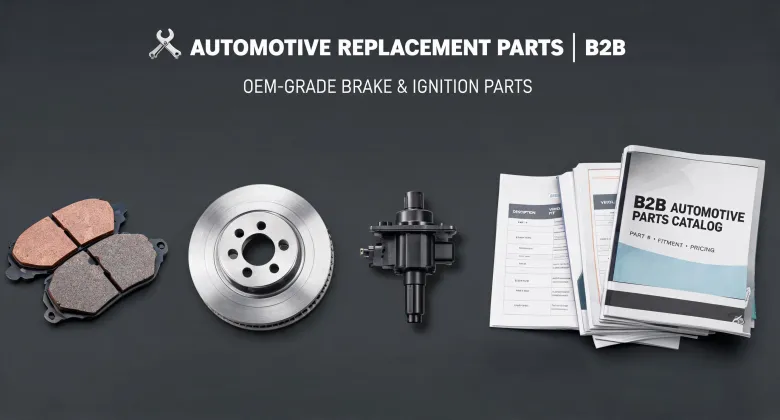
Who This Checklist Is For
If you're a weekend mechanic or a small-shop owner with a lift tied up by a vehicle that has to leave tomorrow, this one's for you. I've spent about 14 years coordinating urgent parts for repair shops and fleets. In 2024, we handled 190 rush orders—maybe 210, I'd have to check the spreadsheet. My job starts when the deadline is short and the wrong part is not an option.
This checklist is built around the four urgent jobs I get asked about most: a Polaris snowmobile starter bendix, a Bendix brake master cylinder swap, an H6024 LED headlight upgrade, and the test everyone wants clear on: how to test for a bad catalytic converter. It's not a full service manual. It's the triage path I use to avoid doing the same job twice.
Before You Start
- Keep a known-good battery and multimeter nearby.
- Have your OBD-II scan tool ready. No code scan, no parts guessing.
- Work in a ventilated area. If the garage is hot, set up a garage cooling fan before you run the engine—heat plus exhaust fumes is a bad combination.
- Take photos of the old part and its tag before you remove it.
Step 1: Diagnose Before You Order
Starter bendix: a click doesn't always mean the bendix is dead
People assume a no-start with a single click is a broken starter drive. Not always. A low battery, a dirty positive connection, or a weak ground does the same thing. If your suspect is the Polaris snowmobile starter bendix, do a voltage-drop test at the starter terminal while someone hits the start button. If you have 12 volts and no cranking, then look at the bendix drive itself. If the bendix gear doesn't throw out to engage the ring gear, replace it.
Bendix brake master cylinder: soft pedal isn't always the master cylinder
The symptom is a brake pedal that sinks to the floor. The usual diagnosis is a failing Bendix brake master cylinder. But before you swap it, check the fluid level, look for leaks at the wheel cylinders and calipers, and bleed the brakes. Here's something vendors won't tell you: master cylinders come back as 'defective' when the real problem was air in the system or a bad rear brake adjustment. If you press the pedal steadily and it slowly sinks, then yes, suspect the master cylinder.
H6024 LED headlight: test the socket before you blame the bulb
An H6024 headlight that's out is often a corroded connector, not a dead filament. If you're upgrading to an H6024 LED headlight, the socket still has to supply clean voltage and ground. Check with a bulb tester or multimeter first. And if you buy a cheap H6024 LED headlight, pay attention to the cooling fan clearance—many have an external driver and fan that won't fit every housing.
Catalytic converter: start with the code, not the converter
P0420 or P0430 means the cat isn't cleaning efficiently. It doesn't always mean the converter itself is dead. What most people don't realize is that a bad catalytic converter is often a symptom, not the root cause. An exhaust leak before the downstream oxygen sensor, a lazy O2 sensor, or an engine misfire can all trigger the same code. You need to fix the cause before you spend money on a new cat.
Step 2: Confirm the Exact Part Before You Pay for Speed
When I'm triaging a rush order, the first question is always: 'What exact part number is on the old part?' Not 'what vehicle is it?' For a Polaris snowmobile starter bendix, the same engine can use different tooth counts depending on model year. For a Bendix brake master cylinder, bore size and port position vary by application. I made the classic part-fitment error in my first year: ordered by vehicle model and got a master cylinder with the ports on the wrong side. Cost me a $75 restocking fee and a two-day delay.
For an H6024 LED headlight, check whether your vehicle takes a sealed-beam replacement or a true H6024 bulb. Some cross-reference charts are wrong. The five minutes you spend verifying the part number is cheaper than the freight charge to return the wrong one.
Step 3: Calculate the Real Cost of the Part
Here's where I see people go wrong. They compare unit prices and pick the cheapest thing that shows up in the search. That's not the total cost. The total cost of ownership includes:
- Base part price
- Shipping or freight
- Core charge and whether you actually return the old part
- Restocking fee if you order the wrong variant
- Labor to install—and labor to do it again if the part fails
I'll give you a real example from last spring. A customer bought a $28 master cylinder to save money. It leaked after two weeks. The second replacement labor cost $160, plus another part. A $65 quality replacement would have been fine. The $28 part turned into a $210 job real quick.
The lowest quoted part price is not the lowest total cost. Time in the bay is part of the bill.
Step 4: Install and Test—Without Guessing
Polaris snowmobile starter bendix
Once you've confirmed the bendix is physically broken or the starter won't crank when you jump the battery, install the new one. A common mistake is putting grease on the drive gear. Don't. The bendix needs to be dry so it can engage the ring gear. Grease collects dust and snow, then it sticks. Crank the engine at least three times before calling it done.
Bendix brake master cylinder
Bench bleed it. I skipped that once—once. If you install a master cylinder with air in the bore, you'll spend an hour trying to get a firm pedal. With two short return lines in the reservoir, a bottle of DOT 3, and a slow push on the piston, the air bubbles come out in less than five minutes.
H6024 LED headlight
After you plug in an H6024 LED headlight, verify the beam pattern against a wall. The old sealed-beam housing had a built-in focal point. An LED bulb needs the chip placed in the same spot; if it's off, you'll get glare and a terrible cutoff. Also check that the LED driver and cooling fan clear the back of the housing. The fan is there for a reason.
Catalytic converter test
Here's how to test for a bad catalytic converter if you don't have a lab-grade exhaust analyzer:
- Start the engine and bring it to operating temperature.
- Use an infrared thermometer to measure the inlet and outlet of the converter.
- At idle, the outlet should be 50–100°F hotter than the inlet if the converter is working.
- If the inlet is hotter than the outlet, the converter can be restricted or dead.
- Watch the downstream O2 sensor on a scan tool. If it's switching rapidly, the cat is doing something. If it's flat/lazy, that matches P0420.
Run that test with the garage door open and a garage cooling fan pushing fresh air through. A hot converter produces carbon monoxide, even when the exhaust system appears sound.
Step 5: Decide if It's a Rush Order
Not every urgent repair needs an overnight part. If the vehicle is safe and the customer has a second vehicle, ship ground. But if the vehicle is on a lift and the job was promised, the difference between ground and next-day is the difference between a happy customer and a chargeback.
In my role coordinating rush orders, I've learned that 'standard' delivery often includes a buffer. That buffer is not your deadline; it's the supplier's way to manage their production queue. You can sometimes ask the supplier to confirm the actual ship date before paying extra.
Mistakes I've Made So You Don't Have To
- Ordering a Polaris snowmobile starter bendix by model year only. The tooth count can differ. Check the gear face before you order.
- Trusting a 'one size fits all' H6024 LED headlight. The cheap ones often have poor optics and a noisy cooling fan. Read the reviews that mention beam pattern, not just brightness.
- Replacing a catalytic converter for P0420 without checking for an exhaust leak upstream. That's a $400 mistake if it was only the gasket.
- Skipping the core return on a Bendix brake master cylinder because the old part 'wasn't worth it.' That core fee is part of the total cost.
This list comes from doing this in the real world, where the clock is always ticking and the customer is waiting at the counter. If there's one rule that saves the most time, it's this: verify the failure before you order, and compare total cost—not just the sticker price.