Any supplier who tells you they can handle “everything” in automotive parts is either lying or using a very generous definition of the word. Over five years of managing parts purchasing for our company's fleet and shop, I've learned that the most valuable sentence a vendor can say is actually this: “This isn't our specialty—but here's who does it better.”
Honestly, that kind of honesty is rare. More often I get “sure, we can get that,” followed by a part that's almost right, followed by a tech who has to modify it into a different shape, followed by a bill that's double what it should've been.
Why I Switched to Bendix Fleet Metlok MKD966FM Brake Pads
When I took over parts purchasing from our maintenance supervisor back in 2022, the shop was buying generic brake pads from a multi-line distributor because they ran about 30% cheaper than name brands. I was pretty impressed with the savings on paper. Then I saw the rework numbers.
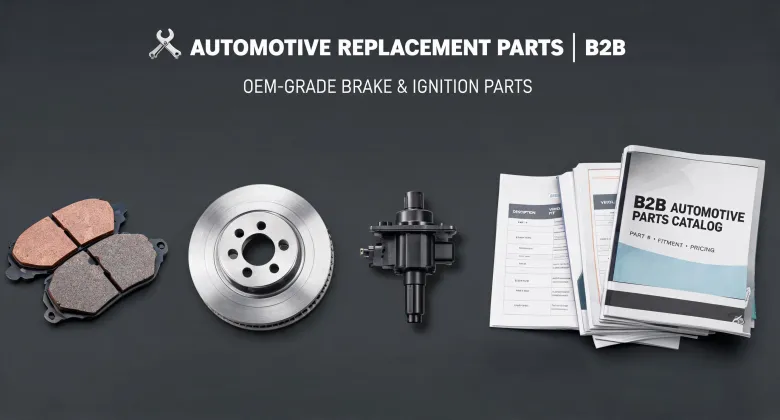
What most people don't realize is that “fleet-grade” friction material isn't a marketing label. It's a different compound, tuned for heavier vehicles and a wider heat range. A light-duty pad on a delivery van can glaze over after a few hard stops, lose bite, and chew up the rotor. Our shop tech said it best: “We're buying cheap pads and paying for two installs.” That's when I started specifying Bendix Fleet Metlok MKD966FM brake pads for that application.
I'm not going to claim the Metlok pads are magic. They're properly engineered parts with published application data. I can verify the friction rating, the temperature range, and which vehicle platforms the MKD966FM actually fits. When I need to verify a bendix car part or check whether we're getting genuine stock, there's an applications engineer on the phone—not just a sales rep reading from a screen.
Here's something vendors won't tell you: the first quote is rarely the final price. Once we committed to a steady volume of Fleet Metlok pads across several trucks, our distributor quietly improved the per-unit pricing. Consistent business beats a one-time bargain hunt, every time.
The Combination Motor Starter That Taught Me About Boundaries
A year later, we hit the classic decision under time pressure. One of our delivery trucks was down, and the replacement part was a combination motor starter. Our main electrical supply house—the kind of place that sells everything from wire nuts to lighting panels—said they could “match it for less.”
Had about two hours to decide because the truck had to be back on route the next morning. Normally I'd compare specs side by side and cross-reference part numbers. In hindsight, I should have waited for the data. But with the route supervisor hovering and the clock running, I let the price difference talk me into the generic unit.
It didn't fit. Well, it sort of fit after our tech spent three hours on “minor modifications” and traced a completely different wiring path. Parts plus labor plus a missed delivery slot later, the total cost was easily double the right part—to say nothing of the conversation with my VP that started with “what happened?” The correct Bendix combination motor starter is engineered to the original mounting footprint and electrical spec. The generic substitute was a construction project.
To be fair, the generic part wasn't junk. It just wasn't the right part. But that's exactly the point: a vendor's willingness to admit the spec matters would have saved all of us the trouble.
How Long Wheel Bearing Last? The Question That Separates Specialists From Generalists
Here's my test for any new parts vendor. I ask them the same question our shop guys ask me all the time: “how long wheel bearing last?” It sounds simple, but the answer tells me whether I'm talking to someone who actually knows wheel-end systems or someone reading a catalog aloud.
A genuine specialist won't give me a single number. They'll say something like: “A properly adjusted tapered roller bearing on a light truck wheel end usually lasts 100,000 to 150,000 miles, provided the preload is set right, the seal stays intact, and water stays out.” Most bearing manufacturers publish a similar range for commercial wheel-end bearings (Source: SKF wheel-end service guide, 2024).
That kind of answer is useful because our trucks run on dirt roads with heavy loads. We lost a bearing at 40,000 miles once, not because the bearing was bad, but because water got past a damaged seal after a deep puddle on a delivery route. Nobody checked the seal. The bearing was fine—the knowledge gap wasn't.
The Drum Brake Adjuster Tool That Nearly Cost Us a Rotor
The same logic applies to hardware. I bought a cheap universal drum brake adjuster tool online, because how complicated can it be, right? It rounded the adjusting slot on the second brake job we used it on. The proper drum brake adjuster tool for our trucks—a star-wheel style with the right handle angle and feel—finished the job in a third of the time. Real specialists recommend tools by application, not by “should work.”
Why I'd Still Push Back on the “One-Stop Shop” Argument
Okay, let me be fair to the generalists. Keeping a single distributor that can fill a mixed order across several categories is genuinely convenient. Fewer purchase orders, fewer invoices, less chasing. I get why a “fewer vendors, better pricing” pitch sounds appealing to anyone drowning in administrative work.
But convenience carries a hidden cost when it means approving “similar” parts in the same order. A generalist on the phone is rarely going to say, “Actually, the spec difference matters here.” The specialist who lives inside one product family will. The vendors who tell me what not to buy from them are the ones I trust with the parts I actually do buy.
I do not mean you should fire your general distributor and juggle twenty specialists. That would be a different headache. But for safety-critical, application-specific components—brake pads, electrical parts, bearings—I want a specialist in the loop. No supplier is an expert at everything, and the ones who pretend otherwise are selling you their ambition rather than their capability.
The Bottom Line
I'd rather work with a specialist who knows their limits than a generalist who overpromises. That's not a business philosophy I read in a book—it's what five years of purchase orders, rework reports, and internal-customer complaints have taught me.
If a supplier ever tells you, “we don't really do that, but here's who you should call,” keep them on your list. That honesty is worth more than a vendor who claims to do it all and does half of it well. In our shop, Bendix stays on the list because they focus on what they actually engineer and manufacture—from brake pads to combination motor starters to the stamped and forged components that hold those systems together. Experts who admit their boundaries are the ones who get the details right. Trust me on this one: I've eaten the cost of forgetting it.